
Where Restaurants Quietly Lose Thousands of Dollars Every Month
Restaurants rarely lose money in one large, obvious place. They lose it in small leaks that repeat hundreds of times a month: over-portioning, free add-ons, unrecorded waste, uncaught vendor increases, spoilage, comps, unnecessary overtime, forgotten subscriptions and delivery commissions. A mistake worth forty cents, made four hundred times, is sixteen hundred dollars a month.
Where do restaurants lose the most money?
Restaurants usually lose money in small amounts repeated many times, not in one large event. The common leaks are over-portioning, free sauces and packaging, unrecorded waste, vendor price increases nobody caught, spoilage, excessive comps, unnecessary overtime, unused subscriptions, delivery commissions and inventory shrinkage. Each one looks trivial. Multiplied by volume, they are the margin.
Owners tend to look for a single dramatic explanation. Someone is stealing. The rent is too high. The delivery apps are killing us.
Occasionally that is true. Far more often, the money leaves in forty-cent pieces, hundreds of times a week, through doors nobody is watching.
The arithmetic that makes this matter
One number explains the whole article.
A mistake that costs forty cents, made four hundred times a month, costs a hundred and sixty dollars. Not alarming.
Now make that mistake ten times over, in ten different places, which is roughly what a typical kitchen does. That is sixteen hundred dollars a month, or nineteen thousand dollars a year.
For a restaurant keeping five cents on the dollar, nineteen thousand dollars of profit requires about three hundred and eighty thousand dollars in sales to replace.
That is the trade. A year of small leaks, or a year of chasing sales you did not need to chase.
The leaks, roughly in order of how often we find them
1. Protein portions that drifted
The most common leak in any kitchen. Specs were set once, then everyone developed their own hand. Nobody weighs anything during service, and a half ounce is invisible on a plate.
Look for it by weighing ten random portions during a busy shift and comparing them against the spec. The gap is usually larger than management expects.
2. Free sauces, sides and packaging
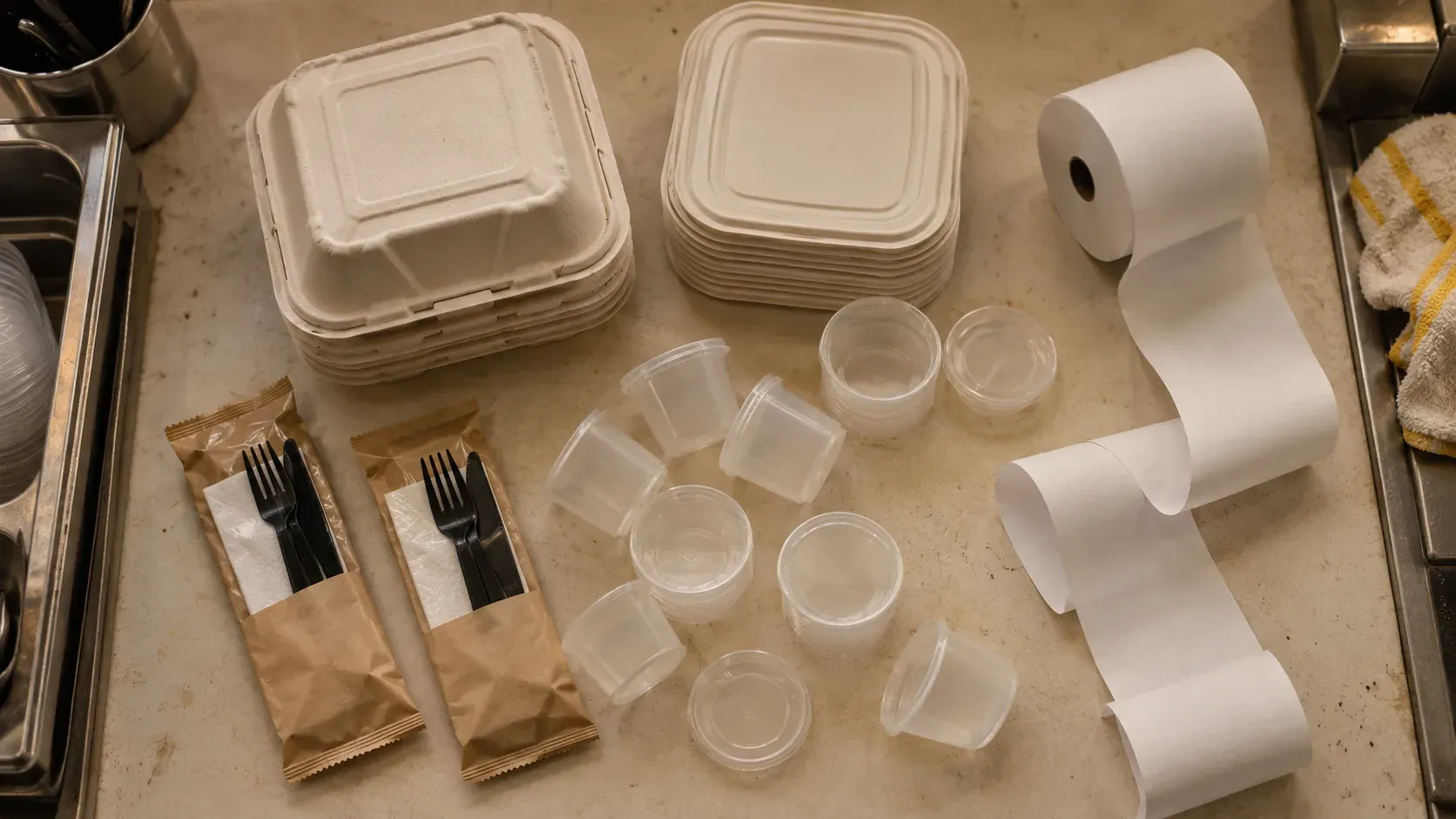
Extra ranch. Two sauce cups instead of one. Cutlery kits in every takeout bag whether the order goes to an office or a house. Extra napkins. A second container for something that fits in one.
Individually these cost pennies. On a high-volume takeout operation, packaging alone can quietly become one of the largest non-food line items in the building.
3. Modifiers that are not priced
The POS has a button for "extra cheese" that adds no charge, because it was set up during a busy opening week and never revisited.
Pull your modifier report. Look for the ones with high counts and no price attached. Some should stay free. Some are giving away a real ingredient several hundred times a month.
4. Vendor increases nobody noticed
Prices go up. Sometimes with notice, often without. Unless someone compares invoices over time, an increase becomes permanent by default.
Related and sneakier: the pack size that got smaller while the price stayed the same. The invoice looks identical. You are getting less.
5. Spoilage and over-prep
Prep lists are usually built for the busiest realistic day, then used every day. The gap between a Saturday prep list and a Tuesday's actual need gets thrown away on Thursday.
6. Unrecorded waste
Every kitchen drops things, burns things and remakes things. That is normal. What is not normal is having no record of it, because unrecorded waste is indistinguishable from theft in your inventory variance, and you cannot fix a problem you cannot name.
7. Employee meals with no policy
Staff meals are worth having. They are also worth defining. Without a policy, the shift meal quietly becomes anything the cook feels like making, which is frequently your highest-cost protein.
8. Comps that solve the same problem forever
A comp is meant to fix a bad experience. When the same comp keeps recurring for the same reason, it has stopped being service recovery and become a subscription to an unfixed problem.
Read the comp report weekly. Look for repetition by dish, by server, by shift.
9. Overtime that was visible on Wednesday
Overtime is usually predictable days before it happens. Almost nobody checks in time.
10. Subscriptions and fees nobody cancelled
Music services, reservation platforms, an old marketing tool, a second delivery tablet, a domain, a scheduling app you replaced. Small monthly charges that continue indefinitely because they are too small to notice and too boring to audit.
Pull twelve months of card and bank statements. Read every recurring charge out loud. Most restaurants find at least one they had forgotten.
11. Delivery commissions on the wrong terms
Third-party delivery is a legitimate channel that many restaurants genuinely need. It is also expensive, and the terms are negotiable more often than operators assume.
The two questions worth asking: what rate are you actually on, and is your menu priced for it? Selling a dish at the same price on a channel taking twenty-five percent means a very different margin than selling it in the dining room.
12. Inventory shrinkage
The catch-all for product that left without being sold. Theft is part of it. So are receiving errors, unrecorded waste, over-portioning and miscounts. Variance tells you it is happening. Finding out which cause requires narrowing it down category by category.
The restaurant leakage checklist
Work through this over one week. Every item is a yes-or-no question with a real answer.
Are portion specs written down and posted at each station?
Is there a working scale on the protein station?
Have you weighed ten random portions during service this month?
Do you know what your packaging costs per takeout order?
Have you reviewed every free modifier in the POS this year?
Have you charted the price of your top ten purchased items over twelve months?
Have you checked case sizes and pack counts against last year?
Is prep quantity adjusted for the day of the week?
Is thrown-away product written down?
Is there a written employee meal policy?
Do you read a comp report every week?
Does someone check hours mid-week against forty?
Have you read every recurring charge on your statements in the last twelve months?
Do you know your actual delivery commission rate, and is your delivery menu priced for it?
Have you counted inventory and calculated variance in the last month?
Every "no" on that list is a place money can leave without anyone seeing it go.
Why these leaks survive
None of them is anyone's job.
The cook is not paid to think about packaging costs. The manager is running a shift. The owner is dealing with the ice machine, a no-show and a health inspection. Each leak is small enough to lose an argument for attention against whatever is on fire today.
They persist because they are boring, not because they are hard. Almost every item on that checklist takes under an hour and never needs to be done again in the same way.
What to do with the list
Do not try all fifteen. Pick the three with the largest volume behind them, because volume is what turns a small leak into a real number. For most kitchens that is portions, packaging and prep quantities.
Fix those, measure for a month, then take the next three.
If you would rather have someone walk the building and find them with you, that is exactly what our restaurant consulting audit does. If the bigger question is why a full restaurant is not producing profit, start with this instead.
Questions people ask
How much money does a typical restaurant lose to small operational leaks?
It depends entirely on volume, but the arithmetic is what matters: a forty-cent error repeated four hundred times a month costs one hundred and sixty dollars. Ten such errors across portions, packaging, waste, comps and overtime reach roughly nineteen thousand dollars a year, which on a five percent margin would take about three hundred and eighty thousand dollars in extra sales to replace.
What is inventory shrinkage in a restaurant?
Shrinkage is product that left the building without being sold. It covers theft, but also receiving errors, unrecorded waste, over-portioning and miscounts during inventory. Variance between theoretical and actual usage tells you shrinkage is happening; identifying the cause means narrowing it down one category at a time.
Are third-party delivery apps worth it for restaurants?
They can be, provided the menu is priced for the commission. The mistake is selling a dish at the same price on a channel taking fifteen to thirty percent as in the dining room, which produces a very different margin on an identical plate. Know your actual rate, price the channel accordingly, and revisit the terms rather than assuming they are fixed.
How do I find where my restaurant is losing money?
Work through a leakage checklist covering portion specs, packaging, free POS modifiers, vendor price history, pack sizes, prep quantities, waste logging, employee meal policy, comp reports, mid-week overtime checks, recurring subscriptions, delivery commission rates and inventory variance. Every unanswered item is a place money can leave unobserved.
Newsletter
Liked this? Get the next one first
New writing on getting found in search and AI answers, restaurant marketing, and the work behind our projects. Only when it’s worth your time.
How we can help
Keep reading
A busy restaurant can still lose money because revenue and profit are different things. Sales must cover food, labor, rent, card fees, delivery commissions, waste and discounts before anything reaches the owner. When a full dining room produces no profit, the cause is usually prime cost rather than traffic. Start with food cost, labor cost and inventory variance.
How to Increase Restaurant Profit Without Getting More CustomersYou can raise restaurant profit without adding a single guest by making more money from the sales you already have. The levers are recipe costing, portion control, vendor pricing, menu engineering, forecast-based scheduling, waste tracking and comp control. On thin margins, a few points of improvement in food and labor efficiency often moves the bottom line more than a marketing push.
Your Food Cost Is Too High. Here's Where to Look First.When food cost is too high, raising menu prices is rarely the first fix. Start by comparing theoretical food cost, which is what your recipes say you should have spent, against actual food cost, which is what you really spent. The gap between them points at portioning, yields, purchasing, waste, spoilage, POS recipe errors, employee meals or counting.