
How Restaurants Build a Copy-and-Paste System for a Second Location
Opening a second location successfully means turning what already works at the first one into a documented system — recipes, SOPs, and training — before you open, not after. The restaurants that expand fastest treat their first location as a prototype, not a one-off.
Most second locations fail for the same reason
Not bad food, not a bad market — a first location that was never actually documented. Everything that made it work lived in one person's head: how the sauce is really made, how the line is actually run during a Friday rush, how a specific complaint gets handled. None of that transfers automatically to a new building with a new crew.
What "copy-and-paste" actually means
Recipes, written the way they're really cooked
Not the recipe as written on day one, but the recipe as it's actually executed today, with every adjustment a good line cook makes without thinking about it. If it's not written down, it's not transferable — it just lives in one person.
SOPs for the moments that aren't obvious
Opening checklist, closing checklist, what happens when a dish comes back, how a new hire gets trained in their first week. The boring parts are exactly the parts that make a second location feel like the first one instead of a rough draft.
A system for correcting drift
Even a documented process drifts over time as staff turns over. A recipe followed loosely for six months isn't the same recipe anymore. Building in a way to catch and correct that drift — not just document once and forget — is what keeps two locations actually consistent with each other.
Where AI tools genuinely help
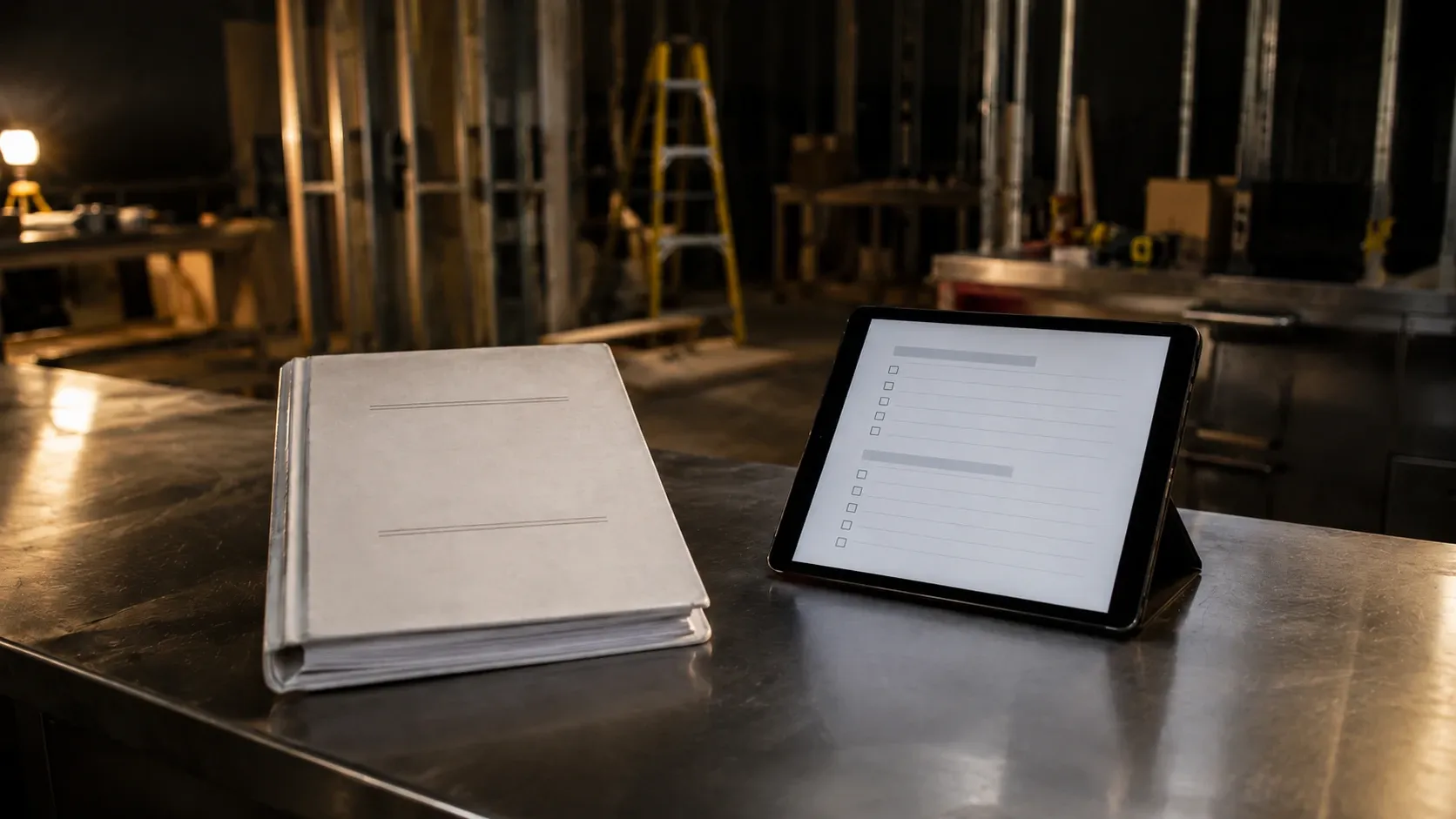
Recipe and SOP management doesn't have to mean a binder nobody opens. AI-assisted tools can turn a documented process into something staff actually reference — a searchable checklist instead of a laminated page taped to a wall, updated centrally instead of drifting differently at each location.
The real timeline
Building this system takes longer before location two opens than most owners expect — and it's the single biggest factor in whether location three ever happens at all.
Questions people ask
How long before opening should this documentation start?
Ideally months before location two is even signed — documenting a recipe or SOP properly, then testing that a new hire can actually follow it, takes real time. Starting the week before opening usually means shipping an incomplete system.
Can AI tools really replace a written SOP binder?
They don't replace the documentation — they replace the binder nobody opens. The actual content (recipes, checklists, training steps) still has to be written accurately; AI-assisted tools just make that content searchable and centrally updatable instead of static and easy to ignore.
What's the most common mistake restaurants make expanding to a second location?
Assuming the team that made location one work will just replicate itself. Without documentation, a second location run by different people is effectively a different restaurant wearing the same name.
Newsletter
Liked this? Get the next one first
New writing on getting found in search and AI answers, restaurant marketing, and the work behind our projects. Only when it’s worth your time.
How we can help
Keep reading
A busy restaurant can still lose money because revenue and profit are different things. Sales must cover food, labor, rent, card fees, delivery commissions, waste and discounts before anything reaches the owner. When a full dining room produces no profit, the cause is usually prime cost rather than traffic. Start with food cost, labor cost and inventory variance.
How to Increase Restaurant Profit Without Getting More CustomersYou can raise restaurant profit without adding a single guest by making more money from the sales you already have. The levers are recipe costing, portion control, vendor pricing, menu engineering, forecast-based scheduling, waste tracking and comp control. On thin margins, a few points of improvement in food and labor efficiency often moves the bottom line more than a marketing push.
Where Restaurants Quietly Lose Thousands of Dollars Every MonthRestaurants rarely lose money in one large, obvious place. They lose it in small leaks that repeat hundreds of times a month: over-portioning, free add-ons, unrecorded waste, uncaught vendor increases, spoilage, comps, unnecessary overtime, forgotten subscriptions and delivery commissions. A mistake worth forty cents, made four hundred times, is sixteen hundred dollars a month.