
The Best Social Media Marketing Strategies for Tampa Businesses in 2026
Tampa is a visually competitive market, so social media marketing here rewards original footage over stock, short vertical video over static posts, and consistency over volume. What works differs by sector: hospitality and restaurants win on food and room footage, med spas on results and trust, real estate on place, and service businesses on the person doing the work.
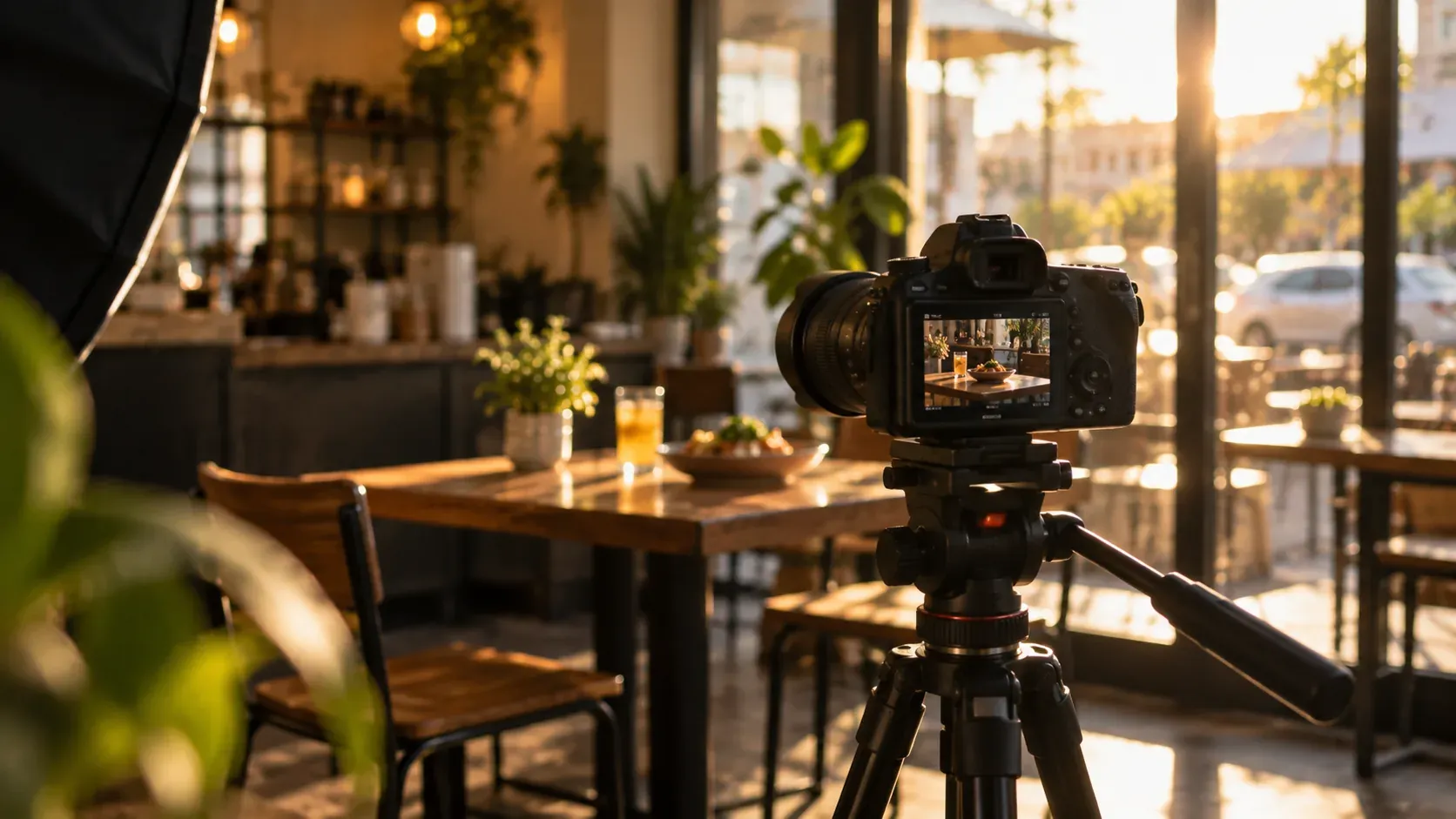
What works for social media marketing in Tampa right now?
Original footage, shot where you actually operate. Tampa is a visually competitive market, and the businesses that do well on social here are the ones producing their own vertical video rather than posting stock images or graphics. Beyond that the answer splits by sector, because a med spa and a restaurant are selling completely different kinds of confidence.
Generic social media advice fails here for a specific reason. Tampa has an unusually strong local creator scene and a hospitality sector that has been producing good content for years. The visual floor is high. Advice written for a national average lands below it.
Why Tampa is its own case
Three things about this market genuinely change the strategy.
The visual standard is high. In a lot of cities a decent phone photo is competitive. Here it is not. Restaurants, bars, gyms and spas in Tampa are producing properly shot content, and a feed that looks obviously cheaper next to them reads as a smaller business whether or not it is one.
Discovery is local and visual. People find places here through Instagram and TikTok, then check Google. That sequence means your social presence is often the first impression and your Google listing is the confirmation. If those two disagree, you lose people in the gap. The Google side of that is a separate discipline worth understanding.
Seasonality is real. Tampa has a genuine season. Visitor mix, spending patterns and what people are looking for all move through the year, and a content plan that ignores that is fighting the calendar.
What actually works, by sector
Restaurants and hospitality
Food in motion beats food sitting still. The pour, the cut, the pull, the steam, the sizzle. Short, close, well lit, no music that fights it.
Also shoot the room. People are choosing where to spend a Friday evening, and they want to know what it will feel like as much as what they will eat. A well-shot room does work that a plate cannot.
Staff on camera outperforms almost everything else, and almost nobody does enough of it. A chef explaining one dish for thirty seconds is more persuasive than a week of beautifully lit plates, because it is a person rather than a product.
Med spas and aesthetics
This sector runs on trust, and trust is built by education rather than by promotion.
Explaining what a treatment involves, what recovery is like, and who it is not for will outperform before-and-afters, which every competitor also posts and which platforms increasingly restrict anyway.
The practitioner's face and voice matter more here than in any other sector. People are choosing a person to let near their face.
Retail
Product in context, not product on white. How it looks worn, used, in a room, in the light.
Retail also has the most natural use for the format that consistently performs: someone showing you something and telling you one true thing about it.
Real estate
Place, not just property. The street, the neighbourhood, the walk to coffee, the light at 6pm.
Agents who show Tampa rather than showing listings build an audience that outlasts any individual property, which is the whole point.
Professional and local services
The hardest sector, because there is nothing photogenic to film. Which is exactly why the person is the content.
Short, direct answers to real questions clients ask. No production value required. Consistency and usefulness beat polish here, and this is the one sector where a phone and a quiet room is genuinely enough.
The format questions everyone asks
Reels, or posts
Reels for reach, static for depth, both for a working account.
Short vertical video is still how new people find you. Static posts and carousels are how someone who already found you decides whether you are any good. An account that does only one of the two either never grows or grows without converting.
How often
Consistently is a better answer than often. Three good pieces a week, every week, beats a burst of daily posting followed by three quiet weeks. The gap does more damage than the lower frequency would have.
How many platforms
Fewer than you think. Most small businesses run better on one platform done properly than three done thinly. That decision deserves its own thinking.
Paid, or organic
Both, doing different jobs. Organic builds the thing people find and judge. Paid puts a specific message in front of specific people. Running paid without organic sends interested people to an empty profile, which is money spent to fail at the last step. Which platform to spend on depends on what you sell.
Working with local creators
Tampa's creator scene is a genuine asset and most businesses use it badly.
Follower count is the least useful number. A creator with four thousand engaged local followers is worth more to a Tampa restaurant than one with a hundred thousand spread across the country, because only one of those audiences can actually turn up.
Look at comments rather than followers. Are they from real local accounts, and do they sound like people who go places?
Give creators the room to make it their way. A creator forced to read your script produces something that looks like an ad, which is precisely what you were paying to avoid.
What to do first
If you are starting from very little, in order:
Shoot a real library. One proper session gets you weeks of material, and it is the difference between planning content and scrambling for it. Everything below depends on this.
Pick one platform and be genuinely consistent on it for ninety days.
Put a person on camera. Whoever in the business can talk about the work without sounding rehearsed.
Make your Google listing match what social promises, since that is where people go to confirm.
Only then think about paid, once there is something worth sending people to.
We do this as social media marketing, and the shoot day usually comes first for the reason above.
Questions people ask
What kind of social media content works best for Tampa businesses?
Original vertical video shot where you actually operate. Tampa has a strong local creator scene and a hospitality sector that has been producing good content for years, so the visual standard is high and stock imagery or generic graphics read as a step down. Beyond format, the specifics differ by sector.
How often should a small business post on social media?
Consistently matters more than frequently. Three good pieces a week every week outperforms a burst of daily posting followed by several quiet weeks, because the gap does more damage than the lower frequency would have. Pick a cadence you can actually sustain.
Should I use Reels or regular posts?
Both, because they do different jobs. Short vertical video is how new people find you, while static posts and carousels are how someone who already found you decides whether you are any good. An account doing only one either never grows or grows without converting.
How should I choose a local creator to work with?
Look at engagement and location rather than follower count. A creator with four thousand engaged Tampa followers is worth more to a local business than one with a hundred thousand spread nationally, because only one of those audiences can turn up. Read the comments to see whether they come from real local accounts.
Newsletter
Liked this? Get the next one first
New writing on getting found in search and AI answers, restaurant marketing, and the work behind our projects. Only when it’s worth your time.
How we can help
Proof
Keep reading
Our seven picks for restaurant influencer partnerships in Tampa Bay and Orlando are Food by Tiana, Tasty Chomps, Jesus Andres Andrade, Bin Min Munch, Michael Haffner, Mr. Tampa Bay and Your Tampa Bestie — chosen for local trust, thoughtful content and how their audiences actually respond, not follower counts.
What Does a Social Media Marketing Agency Actually Do for a Business?A social media agency does considerably more than post. The work is strategy, original photography and video production, editing for short-form, writing, scheduling, community management, paid advertising, creator outreach, analysis and creative direction. Most of the hours go into producing content, not into publishing it, which is the part clients rarely see.
What Should Be Included in a Social Media Marketing Package?A real package covers strategy, a monthly content shoot, short-form video editing, design, copywriting, scheduling, community management, reporting and usually some paid media. Comparing agencies on posts per month is the wrong comparison, because it treats twelve stock graphics and twelve originally shot videos as the same product when they cost and perform nothing alike.