
What Makes Restaurant Content Actually Convert, Not Just Get Likes
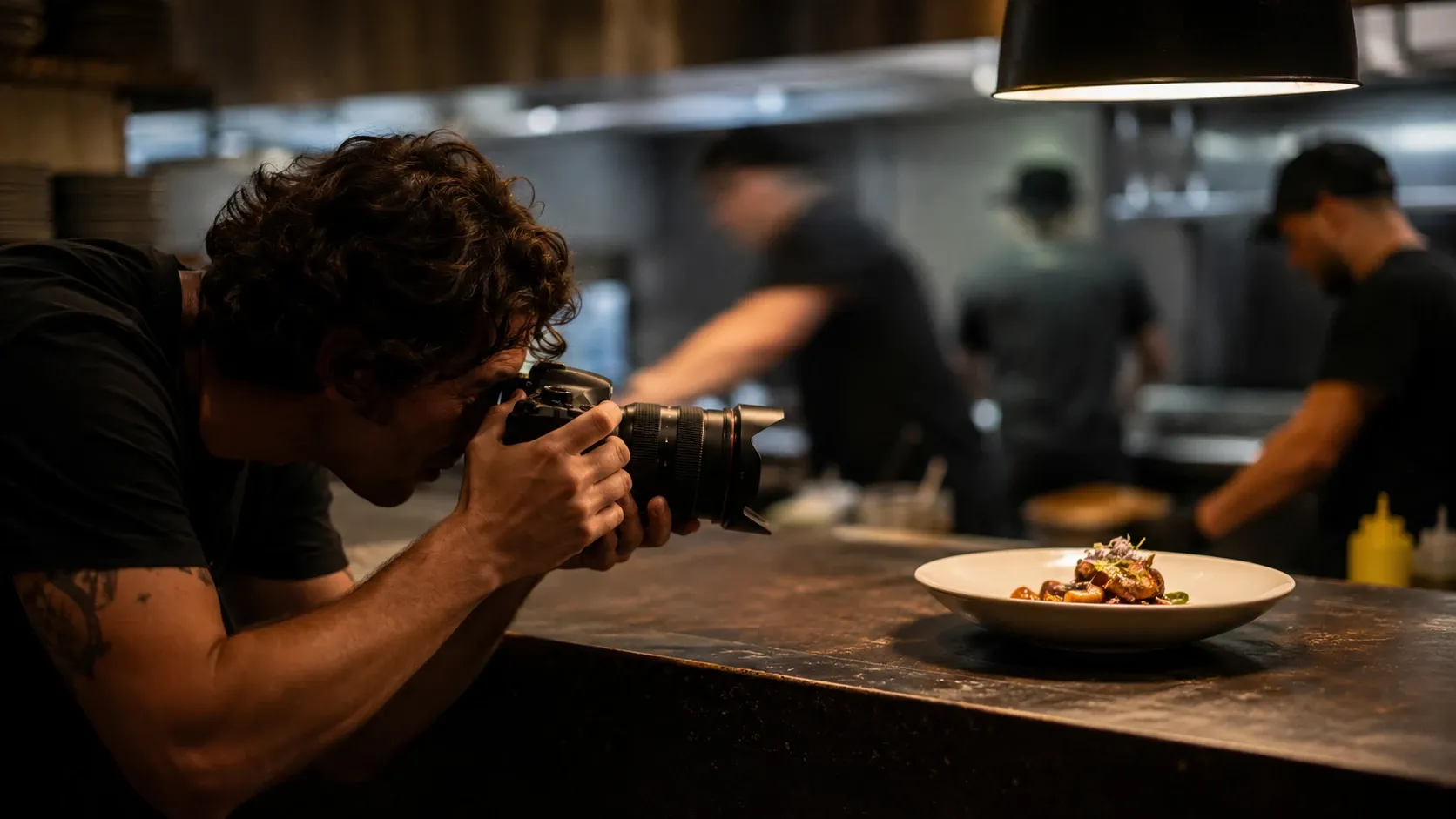
Content that converts shows process, not just plated food — the extrusion, the plating, the hands doing the work. It's shot on location, at your restaurant, not staged in a studio. Likes are a vanity metric; the content that actually drives a booking shows something a stock photo can't fake.
Likes and bookings aren't the same metric
A beautifully lit plated dish gets likes. It doesn't necessarily get someone to open a reservation app. Content that actually converts tends to do something a static plate shot can't — it shows the restaurant is a real, specific place, run by real people, worth the trip.
What actually converts
Process, not just the result
Pasta being extruded. A tweezer placing the final garnish. Someone tasting a dish before it goes out. This is the content people stop scrolling for — not because it's polished, but because it's specific to your kitchen, not interchangeable with any other restaurant's plated-food shot.
On-location, not staged
Content shot at the actual restaurant — the real counters, the real light, the real crew — reads as authentic in a way a studio shoot never will, even a very good one. People can tell the difference, even if they can't articulate why.
A face, not just a plate
Restaurants with a visible chef, a recognizable server, an actual person on camera consistently outperform restaurants that only ever show food. People follow people before they follow menus.
Why this matters more than posting frequency
A restaurant posting five polished-but-generic photos a week will underperform a restaurant posting two real, on-location, process-driven pieces of content. Volume doesn't fix a content problem — the content itself has to give someone a reason to remember the place, not just recognize the cuisine.
The takeaway
If your current content could belong to any restaurant serving similar food, it's not doing its job. The content that converts is the content that could only be your restaurant.
Questions people ask
Should every post show process instead of the finished dish?
No — a mix works best. Plated-dish shots still have a place for menu appeal, but a feed that's only ever the finished plate reads as generic. Process content is what makes a specific restaurant memorable, not a replacement for showing the food.
What if the kitchen team doesn't want to be on camera?
That's common and workable — hands, tools, and process shots (extruding pasta, plating, tasting) still deliver the authenticity that drives engagement without needing anyone's face on camera if the team isn't comfortable with it.
Newsletter
Liked this? Get the next one first
New writing on getting found in search and AI answers, restaurant marketing, and the work behind our projects. Only when it’s worth your time.
How we can help
Professional photography and video built for social — long-form, branded, short-form, and personal brand video, shot for YouTube, Instagram, TikTok, LinkedIn, and Facebook, in both vertical and horizontal formats.
Social Media MarketingFull-service social media marketing built around your brand, not a template — brand and social strategy, content creation, social media management, community engagement, influencer marketing, and paid social advertising, all working together as one system.
Proof
Keep reading
Our seven picks for restaurant influencer partnerships in Tampa Bay and Orlando are Food by Tiana, Tasty Chomps, Jesus Andres Andrade, Bin Min Munch, Michael Haffner, Mr. Tampa Bay and Your Tampa Bestie — chosen for local trust, thoughtful content and how their audiences actually respond, not follower counts.
The Best Social Media Marketing Strategies for Tampa Businesses in 2026Tampa is a visually competitive market, so social media marketing here rewards original footage over stock, short vertical video over static posts, and consistency over volume. What works differs by sector: hospitality and restaurants win on food and room footage, med spas on results and trust, real estate on place, and service businesses on the person doing the work.
What Does a Social Media Marketing Agency Actually Do for a Business?A social media agency does considerably more than post. The work is strategy, original photography and video production, editing for short-form, writing, scheduling, community management, paid advertising, creator outreach, analysis and creative direction. Most of the hours go into producing content, not into publishing it, which is the part clients rarely see.