
The challenge
Nueva Cantina runs four modern Mexican taquerias across Tampa Bay — St. Pete, Downtown Tampa, Brandon and Palm Harbor — known for street tacos off the trompo, birria and fresh-squeezed margaritas. Its website was a WordPress page-builder theme: a red banner, a carousel of menu categories and stacked sections. It worked, but it looked like any restaurant template, not like a night at Nueva.
The approach
A design system with a cantina's energy
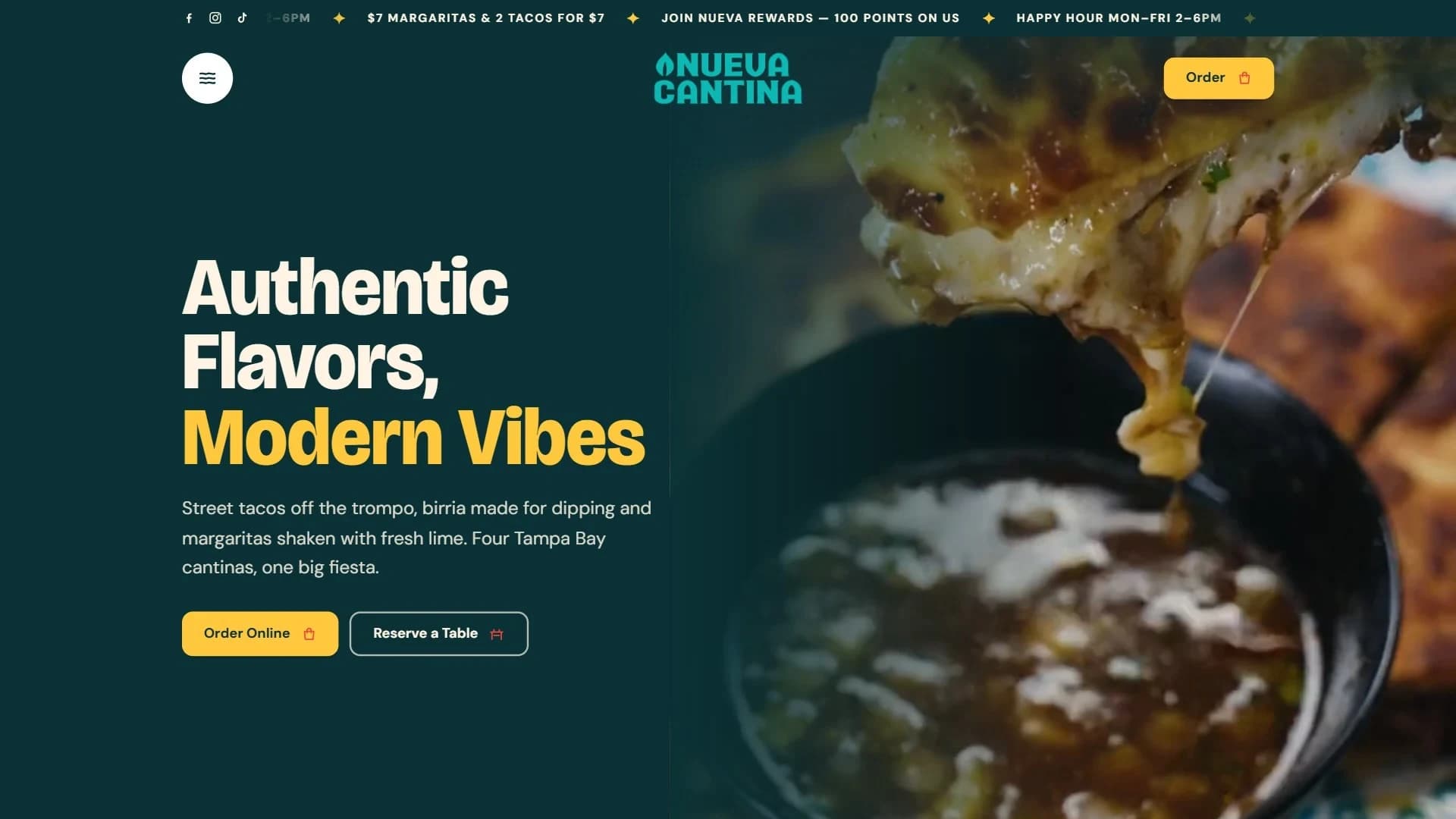
Deep teal and cream, with tomato and sunshine-yellow accents. Bricolage Grotesque for the headlines, DM Sans for reading, and Caveat Brush for the handwritten notes that sit on the page like stickers. Wavy edges, patterns and doodles tie every section together.
Motion with a sense of fun
On a first visit, a trompo stacks itself and the logo draws in before the page opens. Headlines land word by word, fan favourites swipe sideways, and any dish opens in place with its description and options. Smooth scrolling switches off for visitors who ask their device for less motion.
One site, four seasons
From a private dashboard, the team switches the whole site between Fiesta, Halloween, Christmas and Easter. Colours, hero dishes, copy and decorations change together, so a seasonal promotion is a click, not a redesign.
A menu the team runs themselves
More than a hundred dishes and drinks across 14 sections, each with its own page, photo, price and dietary tags. In the same dashboard the team edits prices, descriptions and photos, and adds, hides, reorders or removes items, with a version history to roll back any change.
Every request reaches the right inbox
Catering, private events, large-party reservations, careers with a résumé upload, and contact forms all arrive by email, and each form can be routed to a different inbox per location.
Built to be found
Each location carries structured data for its address and opening hours, every dish is marked up as a menu item, and the old WordPress addresses redirect to their new pages, so existing links keep working.
The live site
Not a mockup — this is Nueva Cantina’s real website, running inside the frames below. Scroll it, click through it, open the 3D tour.
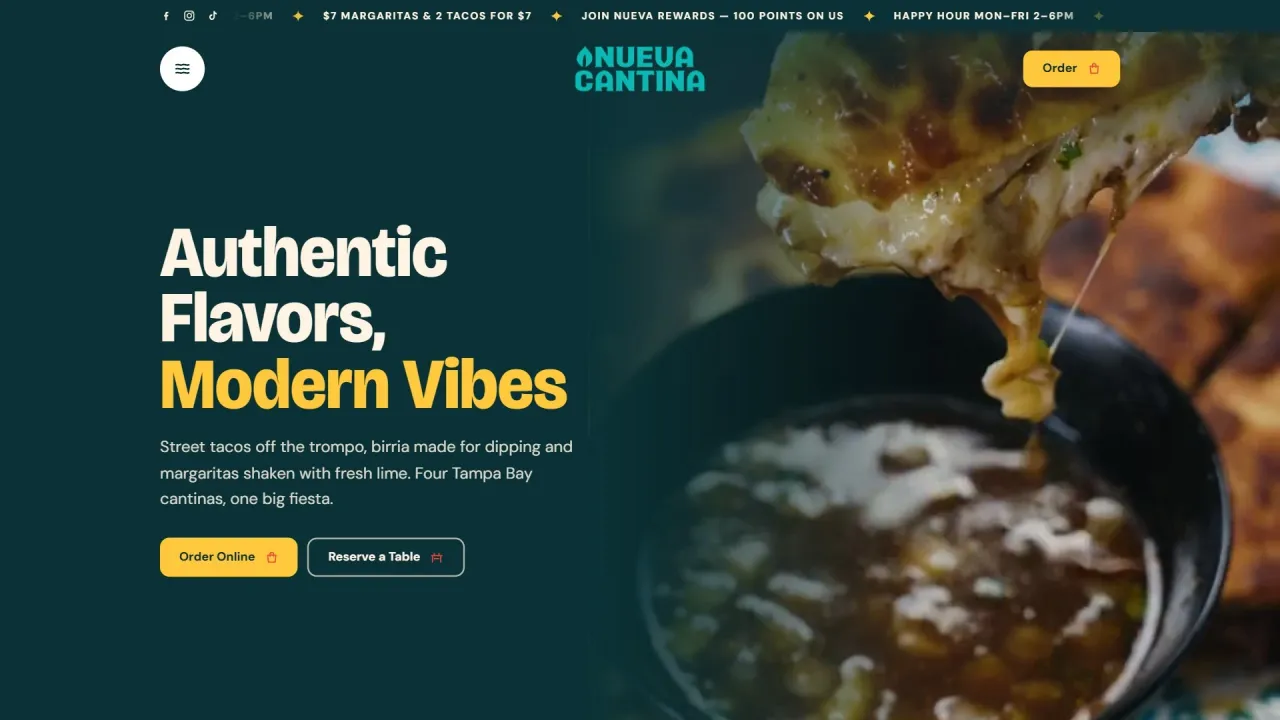

Live site — scroll and click inside both screens
The rebuild, in 90 seconds
Services
More work
From a website-builder template to a bilingual villa showcase — with the 3D tour inside the page.
YoYo BurgersThe product was already there. The opportunity was making the brand look as strong as the food.
BekdashFrom a niche dessert concept to a 50,000-follower brand with broader market appeal.
Further reading
Start with the jobs that happen the same way every time and cost you money when they’re slow: replying to new leads, following up, booking and reminders, asking for reviews, and weekly reporting. Instant lead replies come first — they’re the easiest win and the costliest to get wrong.
How Much Does a Small Business Website Cost in 2026?Most professionally built small business websites cost between $2,000 and $12,000, plus roughly $120–$2,400 a year to host and maintain. DIY templates cost far less up front; custom sites with booking, ordering, several languages or system integrations often start around $15,000.
Custom Website vs. Wix, Squarespace or WordPress: What Should a Growing Business Choose?There is no single right platform. Squarespace and Wix are genuinely good choices for a small site that rarely changes. WordPress suits content-heavy sites with a maintainer. A custom build earns its cost when the site is a working part of the business rather than a brochure, and when speed, structure or integrations start deciding revenue.
Want work like this?
Tell us what you're trying to stand out from.