
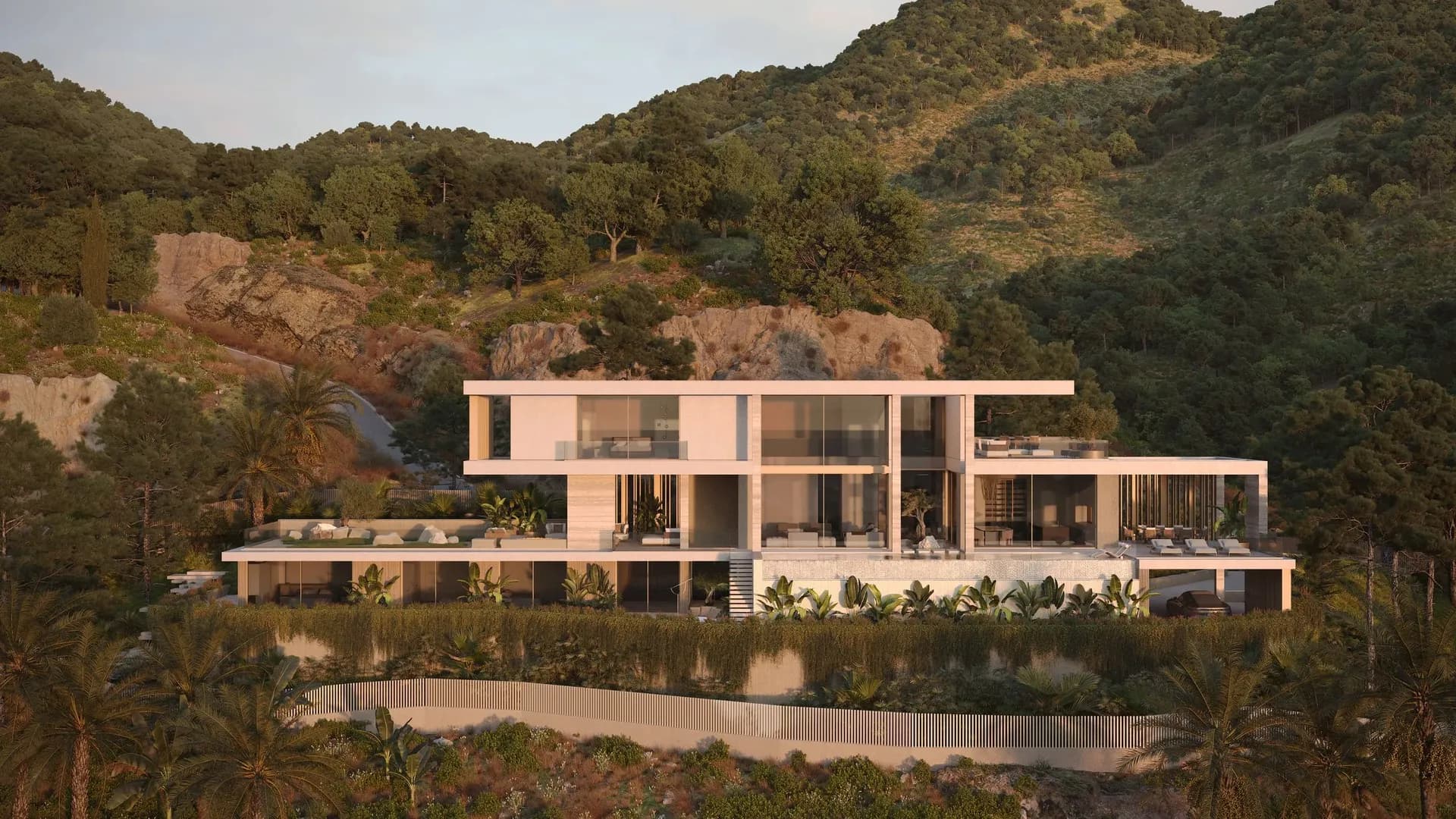
The challenge
Signature Development builds turnkey, nature-integrated villas in the hills above Marbella — living trees inside the house, infinity pools, sea views, one team from concept to keys. Its website was a Wix template that told none of that: generic stacked sections, a brown palette borrowed from nowhere in the architecture, and a flagship villa presented like any other listing. Buyers, often abroad, needed to understand a home before flying in to see it.
The approach
A design system made from the architecture
White gallery walls, warm stone, bronze and a deep night tone, set in Sora for the interface and Italiana for numerals. One easing curve runs through every animation on the site, so nothing moves in a way that feels borrowed.
Motion that feels like walking through a villa
The logo draws itself on the first visit. Headlines rise letter by letter. An endless strip of renders drifts between curved white edges, paragraphs fill in as you scroll, and the villa's rooms — Living, Suites, Wellness — pin in place one at a time. Interiors scroll sideways, and a drag slider turns Villa Continental from daylight to dusk. Every bit of it switches off for visitors who ask their device for less motion.
The 3D tour, inside the page
The Kuula walk-through of Villa Continental runs right inside the site rather than sending buyers somewhere else, with its own full-screen control — including a fallback for iPhone, which can't put a page element into full screen.
Built to grow without a redesign
Every project lives in one data file with a status: coming soon, in progress, for sale or sold. Adding the next villa, or marking one sold, is an edit — not a design job.
Bilingual and ready for search
Every page exists in English and Spanish, with a sitemap that tells search engines which version is which, plus strict security headers throughout.
The live site
Not a mockup — this is Signature Development’s real website, running inside the frames below. Scroll it and click through it.
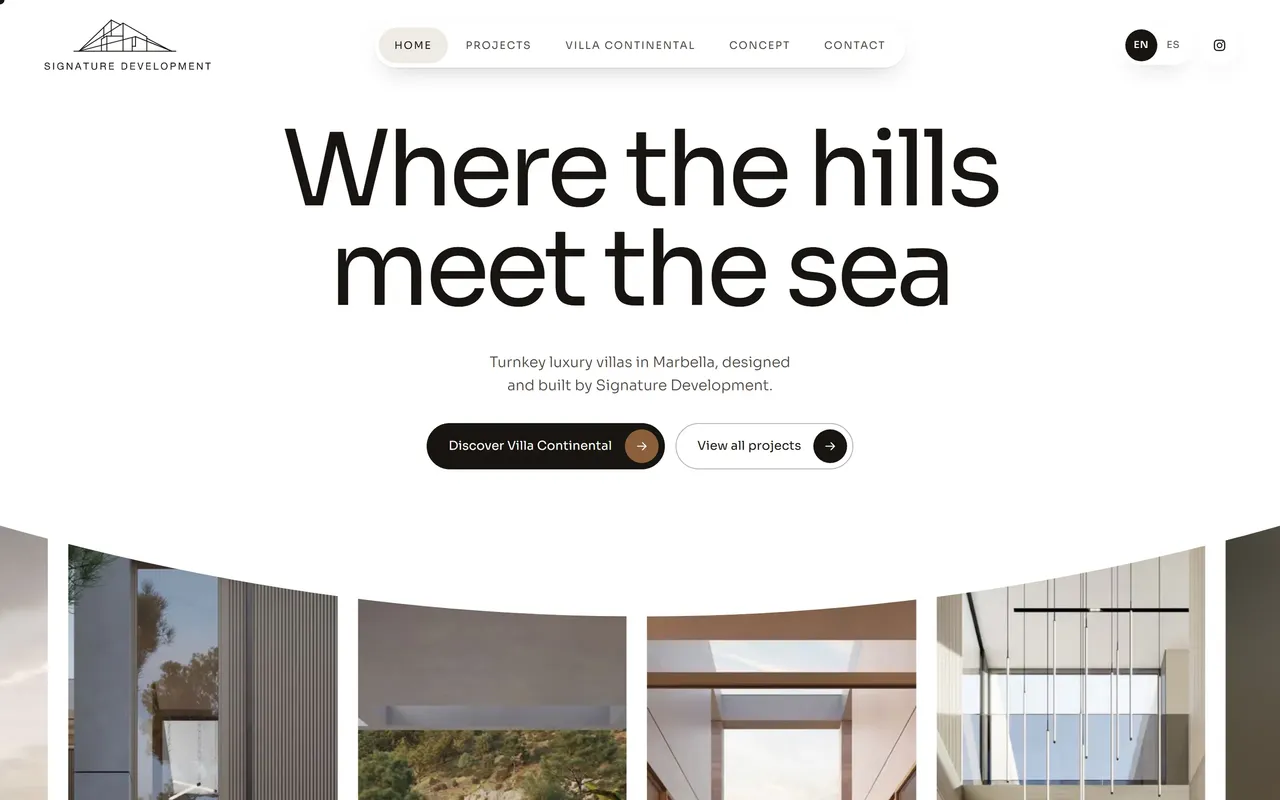
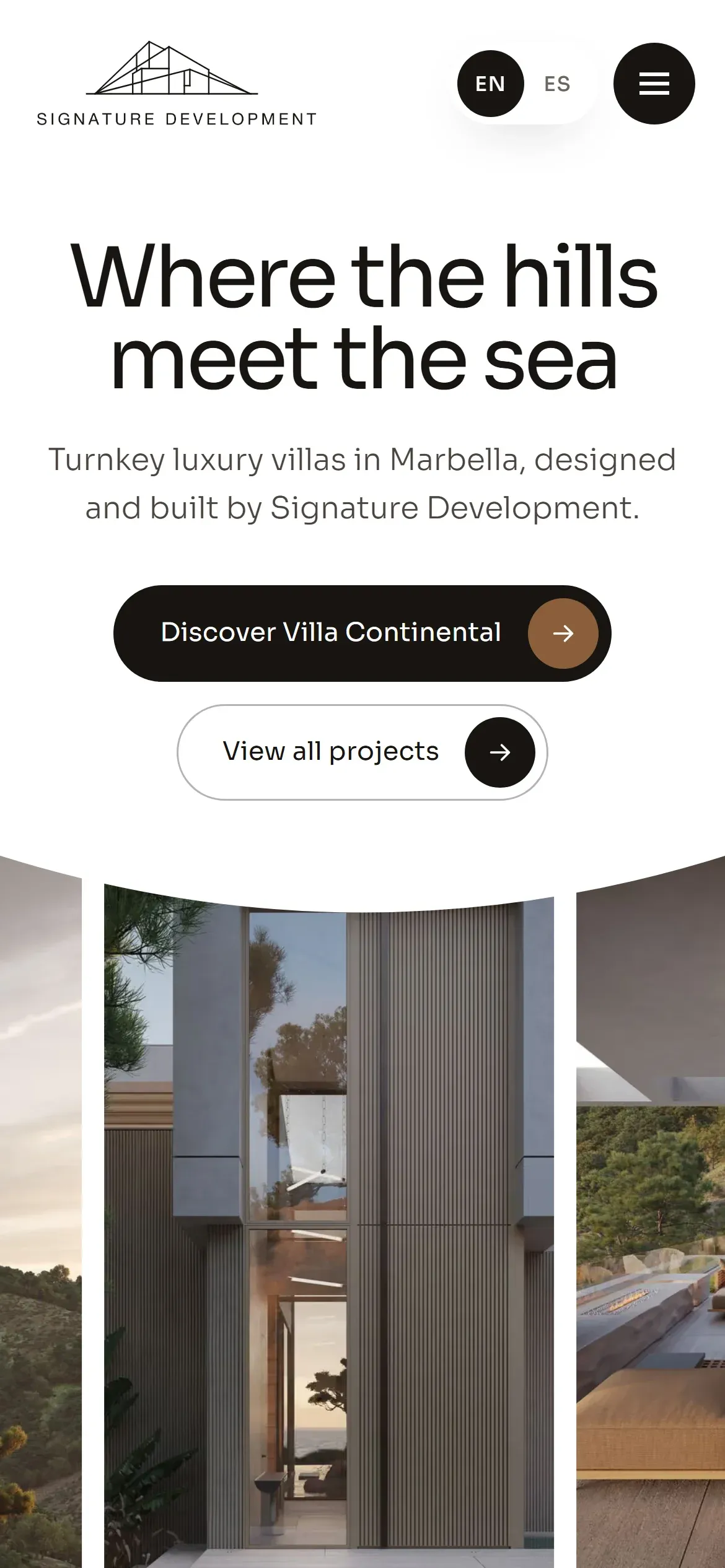
Live site — scroll and click inside both screens
The site, on film
Services
More work
From a Squarespace template with picture menus to a site built around the stone that grinds their masa.
Nueva CantinaFrom a WordPress page builder to a site with four seasons, a menu the team edits themselves, and a trompo on the loading screen.
YoYo BurgersThe product was already there. The opportunity was making the brand look as strong as the food.
Further reading
Start with the jobs that happen the same way every time and cost you money when they’re slow: replying to new leads, following up, booking and reminders, asking for reviews, and weekly reporting. Instant lead replies come first — they’re the easiest win and the costliest to get wrong.
How Much Does a Small Business Website Cost in 2026?Most professionally built small business websites cost between $2,000 and $12,000, plus roughly $120–$2,400 a year to host and maintain. DIY templates cost far less up front; custom sites with booking, ordering, several languages or system integrations often start around $15,000.
Custom Website vs. Wix, Squarespace or WordPress: What Should a Growing Business Choose?There is no single right platform. Squarespace and Wix are genuinely good choices for a small site that rarely changes. WordPress suits content-heavy sites with a maintainer. A custom build earns its cost when the site is a working part of the business rather than a brochure, and when speed, structure or integrations start deciding revenue.
Want work like this?
Tell us what you're trying to stand out from.