
SEO for Restaurants in Tampa: How to Show Up on Google Maps and in ChatGPT
Restaurant SEO in Tampa comes down to four things: a complete Google Business Profile, a steady flow of real reviews, a fast website with your menu as text instead of a PDF, and mentions on the local sites Google and AI tools trust. Get those right before anything else.
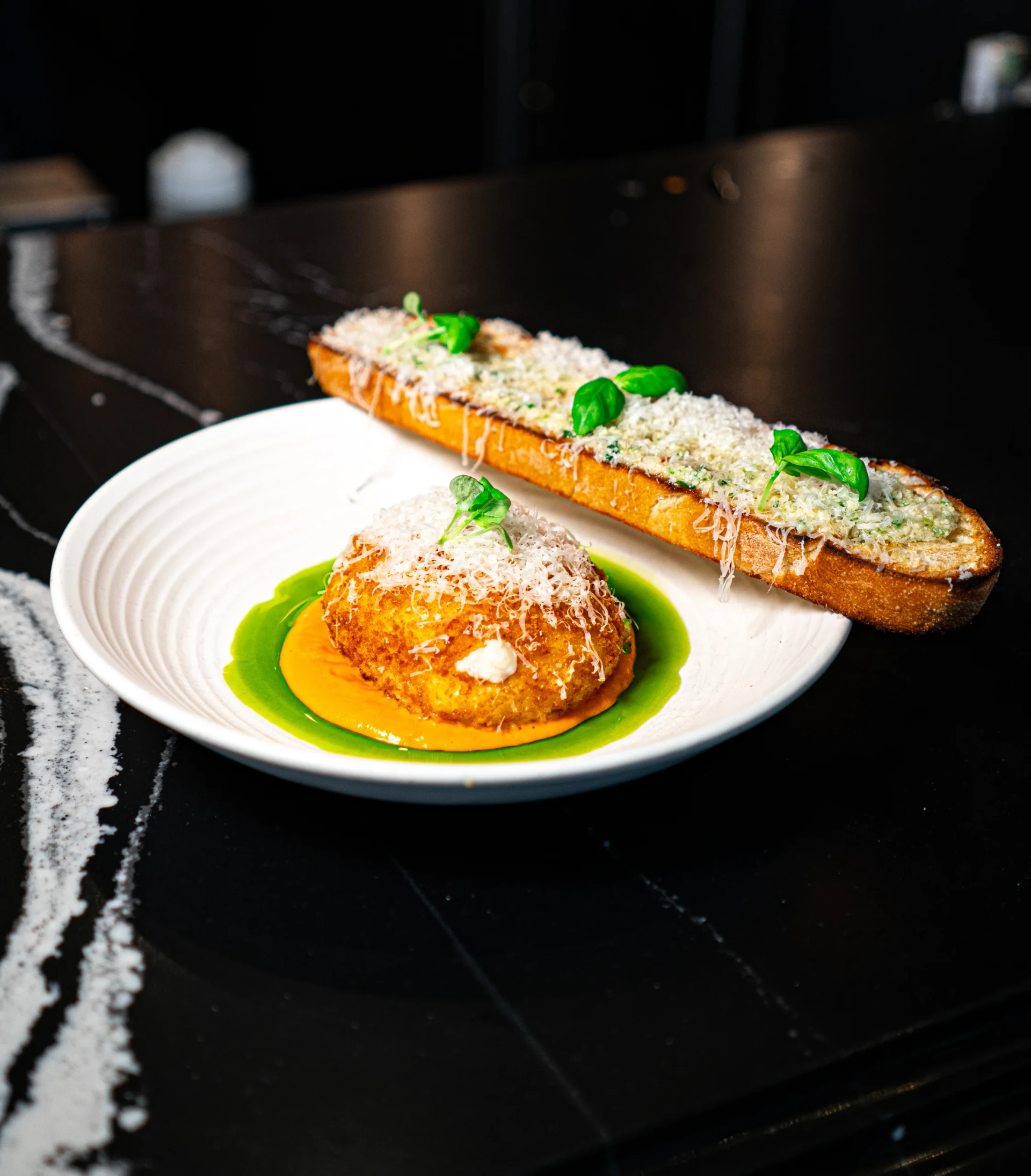
Restaurant SEO is not a mystery, but it is a different job from SEO for most businesses. Nobody reads ten pages about a restaurant before booking. They look at a map, a few photos, a star rating and a menu, and decide in minutes. Here's how to win that moment in Tampa Bay, on Google and in the AI tools people now ask instead.
How do people in Tampa choose where to eat now?
Mostly on their phone, through Google. They search "brunch Hyde Park", "best ramen in Tampa" or simply "restaurants near me", scan the map results, and tap the one with good photos, recent reviews and a menu they can read.
Reviews carry a lot of that decision. In BrightLocal's 2026 Local Consumer Review Survey of 1,002 US adults, 97% said they read reviews for local businesses.
And more people now skip the search results entirely and ask ChatGPT, Perplexity or Google's AI Mode: "Where should I take my parents for dinner in South Tampa?" Those tools build their answers from the same places Google does — your profile, your reviews, your website and what local sites say about you — so the work below covers both.
How does Google decide which restaurants show up on the map?
Google says it plainly in its own guide to local ranking. Local results are based on three things:
- Relevance: how well your Business Profile matches what someone searched for.
- Distance: how far you are from the person searching, or the area they named.
- Prominence: how well known you are, including how many reviews you have and how many websites link to you.
You can't change your distance. Everything else on this page is about relevance and prominence. And one line from that guide is worth remembering when someone tries to sell you a shortcut: "There's no way to request or pay for a better local ranking on Google."
Step 1: Make your Google Business Profile complete
This is the single most important page your restaurant has, and it isn't on your website. Open it at business.google.com and work through:
- The most specific category you can. "Italian restaurant" beats "Restaurant". Add secondary categories for what you also are: wine bar, brunch restaurant, caterer.
- Hours that are always right, including holidays. Wrong hours are the fastest way to lose a table and earn a one-star review.
- Your menu, added in the profile and linked to a menu page on your website.
- Reservation and order links, so people can act without leaving Google.
- Photos, added often. Dishes, the room, the bar, the outside so people can find the door. Real photos beat stock every time.
- Attributes that match how people search: outdoor seating, vegan options, happy hour, private dining, wheelchair accessible.
- Posts for specials, events and new dishes. They keep the profile fresh.
Google notes that businesses with complete and accurate information are more likely to show up in local results. Most restaurants leave half of these fields empty.
Step 2: Get a steady flow of real reviews
Reviews are part of prominence, and Google says more reviews and positive ratings can help your ranking. What matters most:
- A steady flow, not a burst. Ask every happy table: a card with a QR code to your review link, a line on the receipt, a quick word from the server.
- Reply to every review, good and bad, within a few days. A calm, specific reply to a bad review often wins more trust than the review cost you.
- Never pay or discount for reviews. It breaks Google's policies, the reviews get removed, and the profile can be suspended.
Step 3: Build a website Google and AI can actually read
Your website backs up everything your profile says. For restaurants, the details matter more than the design:
- Put the menu on the page as text, not as a PDF or a photo of the printed menu. Search engines and AI tools read text. A PDF menu is close to invisible, and impossible to read on a phone.
- Write your address, phone number and hours in plain text on every page, exactly as they appear on Google.
- Add restaurant structured data: code that tells Google your cuisine, price range, hours, menu and reservation link in a format it reads directly.
- Make it fast on a phone. Most people looking for dinner are on mobile, often on cell data.
- One page per location if you have more than one, each with its own hours, menu and photos.
- Answer the questions people actually ask: parking, reservations, large groups, gluten-free options, private events. Short, direct answers on your site are exactly what AI assistants quote.
We cover how AI tools pick which websites to quote in what a website needs for AI search to quote it.
Step 4: Show up when people ask ChatGPT where to eat
This is where SEO, AEO and GEO meet. (We explain the difference in SEO vs AEO vs GEO.) When someone asks an AI assistant for a restaurant recommendation, it doesn't just check your website. It looks for agreement across the web:
- your Google rating and the words in your reviews ("best birria in Tampa", "great for groups")
- Yelp, TripAdvisor and OpenTable listings
- local press and "best of" lists, from food writers to neighborhood guides
- food creators who have posted about you
- your own site, if it states the facts clearly
So the restaurants that get recommended are the ones the web already agrees on. Two practical moves:
- Make your details identical everywhere. Same name, address, phone and hours on Google, Yelp, TripAdvisor, OpenTable, Apple Maps and your site. Inconsistency makes you look less certain to every system reading it.
- Give people something worth writing about. A signature dish, a strong visual identity, a reason to post. That is what earns press, creator content and organic mentions. Our list of Tampa Bay and Orlando food influencers is a good place to start.
Step 5: Earn local mentions and links
Prominence also comes from other websites talking about you: local food writers, neighborhood blogs, event listings, the chamber of commerce, partner businesses and charity events. One mention from a respected Tampa Bay source is worth more than a hundred directory listings nobody reads. Pitch a new menu, a chef's story or a community event, and make it easy to cover with good photos.
How long does restaurant SEO take?
Fixing your profile, menu and website basics can change how you show up within weeks. Building reviews and local reputation takes months, and it compounds. For reference, our guide to Tampa Bay food influencers reached Google's first page within about two weeks of publishing, but a restaurant competing on the map for "best brunch in Tampa" is a longer game. Anyone promising a guaranteed number-one spot is selling something Google says doesn't exist.
What mistakes cost restaurants the most?
- A PDF or image-only menu.
- Wrong or missing holiday hours.
- Duplicate Google listings, often left over from a previous owner or an old address.
- Different phone numbers or names on different sites.
- Ignoring reviews, or arguing with reviewers.
- Buying reviews or followers.
- A slow website built for desktop.
Want help getting found in Tampa?
We work with restaurants across Tampa Bay on exactly this: the profile, the photography and video that make people choose you, the website, and the restaurant marketing around it. See the results we got for Olivia, or tell us about your restaurant.
Questions people ask
How do I get my restaurant to show up on Google Maps?
Complete your Google Business Profile with the most specific category, accurate hours, your menu, reservation links, attributes and fresh photos, then build a steady flow of real reviews. Google ranks local results on relevance, distance and prominence.
Can I pay Google to rank my restaurant higher on the map?
No. Google states that there is no way to request or pay for a better local ranking. Ads can appear above the map results, but the organic map ranking itself cannot be bought.
Should my restaurant menu be a PDF?
No. Put the menu on your website as text. Search engines and AI assistants read text, while a PDF or photo of the menu is close to invisible to them and hard to read on a phone.
How do restaurants get recommended by ChatGPT?
AI assistants look for agreement across the web: your Google rating and the words in your reviews, listings on Yelp, TripAdvisor and OpenTable, local press and best-of lists, creator posts, and clear facts on your own website. Keep your details identical everywhere and give people something worth writing about.
How long does restaurant SEO take to work?
Fixing your profile, menu and website basics can change how you show up within weeks. Building reviews and local reputation takes months and keeps compounding.
Newsletter
Liked this? Get the next one first
New writing on getting found in search and AI answers, restaurant marketing, and the work behind our projects. Only when it’s worth your time.
How we can help
Structuring content to appear in featured snippets, People Also Ask boxes, and AI Overviews — the search results that answer a question before a visitor ever clicks through.
GEOStructuring content so AI systems like ChatGPT, Claude, and Perplexity cite it when answering questions — the newest layer of search visibility, built on top of solid SEO rather than replacing it.
SEOTechnical SEO, on-page structure, and local search optimization for Tampa-area businesses — the foundation that makes every other marketing channel perform better.
Keep reading
Most professionally built small business websites cost between $2,000 and $12,000, plus roughly $120–$2,400 a year to host and maintain. DIY templates cost far less up front; custom sites with booking, ordering, several languages or system integrations often start around $15,000.
How Does Local SEO Work for a Tampa Business in a Crowded Market?Local SEO in a competitive market like Tampa comes down to three things done consistently: a fully optimized Google Business Profile, real local citations with consistent business info, and location-specific content — not just a city name dropped into existing page copy. Consistency and depth beat shortcuts here.
What Does a Website Need for AI Search Tools to Quote It Correctly?AI search tools need clean, crawlable HTML (not content trapped behind JavaScript that never renders for a bot), structured data like Schema.org markup, and genuinely substantive content — not thin pages built purely for keywords. A fast, well-built site is table stakes before any of the content work matters.