
The challenge
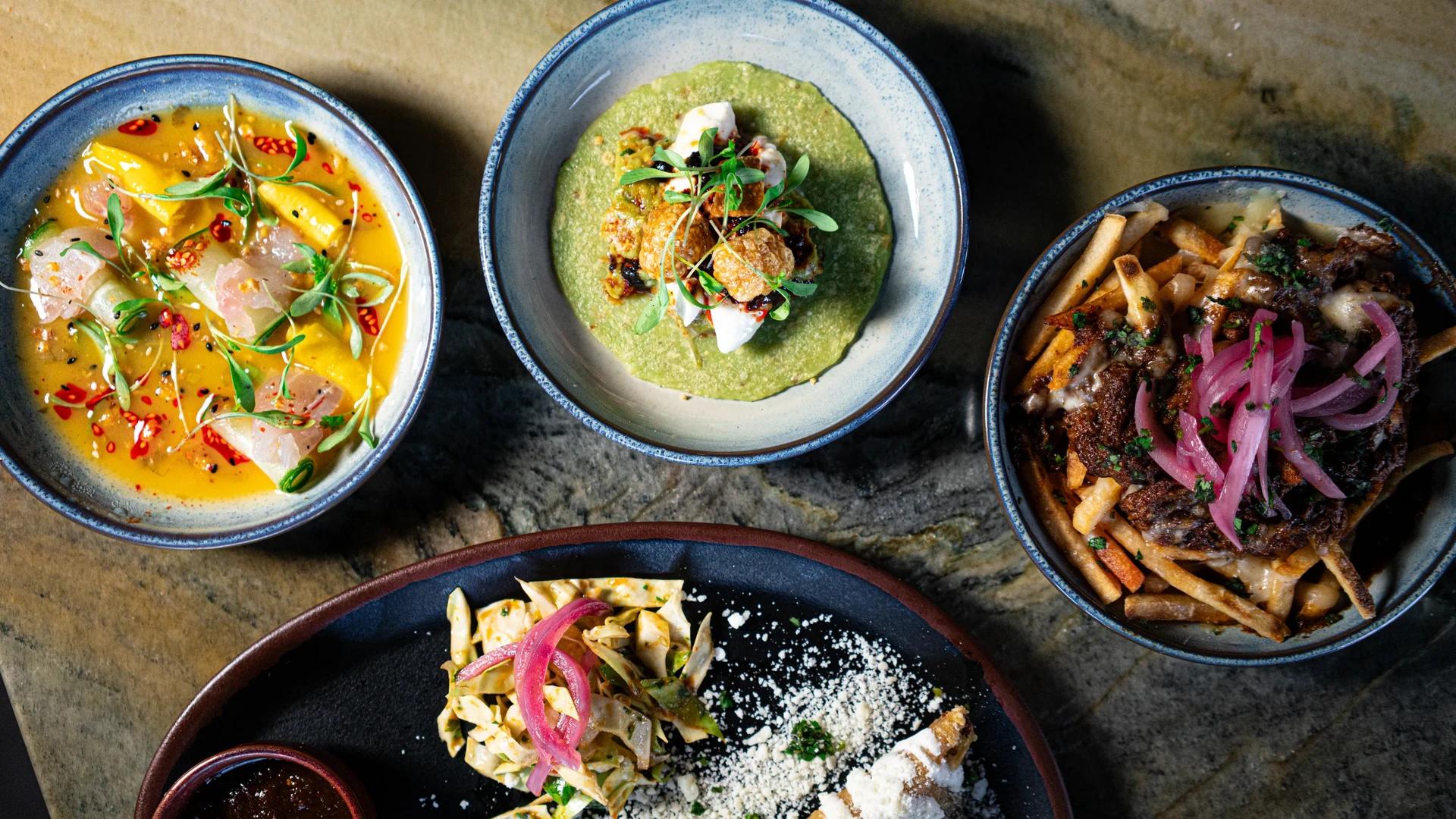
Con Amor is a modern Mexican restaurant in Tampa’s Seminole Heights that nixtamalizes its own corn and grinds it into fresh masa every day, a process few kitchens in Tampa Bay take on. Its website was a basic Squarespace template: a food photo, a short paragraph about nixtamalization, and menus posted as pictures, so diners couldn’t search them and Google couldn’t read them. The one thing that sets Con Amor apart was barely there.
The approach
A system built from the molino
We called the design direction the Molino Program. It takes the concentric lines of the Mexico '68 identity and turns them into the grooves of the volcanic stones that grind Con Amor's masa every morning. Those lines frame every video, photo and block of copy. The happy-hour card's triangle border marks where paper meets the dark agave field.
Their brand kit, kept whole
The client's five colours (Agave Shadow, Cactus Gold, Cinnamon Sunset, Golden Honey and Spicy Ember), their logos, stamps and icons all come straight from their brand kit. Each part of the site keeps one icon in one colour wherever it appears. Spicy Ember is used for one thing only: Reserve.
Type taken from the printed menus
Headlines are condensed and heavy, like the menu cards. Anything a diner checks (a price, the hours, the address) is set in Roboto Mono, because the printed menus set their text in mono.
Menus people and search engines can read
The old menus were pictures. Now dinner, brunch, happy hour and drinks are real text, with every price and add-on. Menu tabs follow you down the page, the menus print cleanly, and every dish is marked up for search.
Masa first
A dedicated nixtamalization page explains the process in the chef's own words, with a captioned video and an inquiry form for restaurants and home cooks who want fresh masa. Every page leads back to it.
Ready for tonight, on a phone
The hours, the parking, a live "open now" line in Tampa time and Reserve are never more than a tap away. Event and catering minimums sit in plain view next to an inquiry form.
Motion that draws, then gets out of the way
On a first visit, the molino's grooves draw out, the logo assembles itself and the stones part to reveal the page. Headings rise, menu leaders draw toward their prices, and the contour lines open as you scroll. All of it switches off for visitors who ask their device for less motion, and crawlers never wait for it.
Built to be cited
Restaurant, menu, FAQ and article structured data, plus a sitemap and llms.txt, are generated from the same data files as the pages. The old Squarespace addresses redirect to their new pages, so existing links keep working.
The live site
Not a mockup — this is Con Amor’s real website, running inside the frames below. Scroll it and click through it.
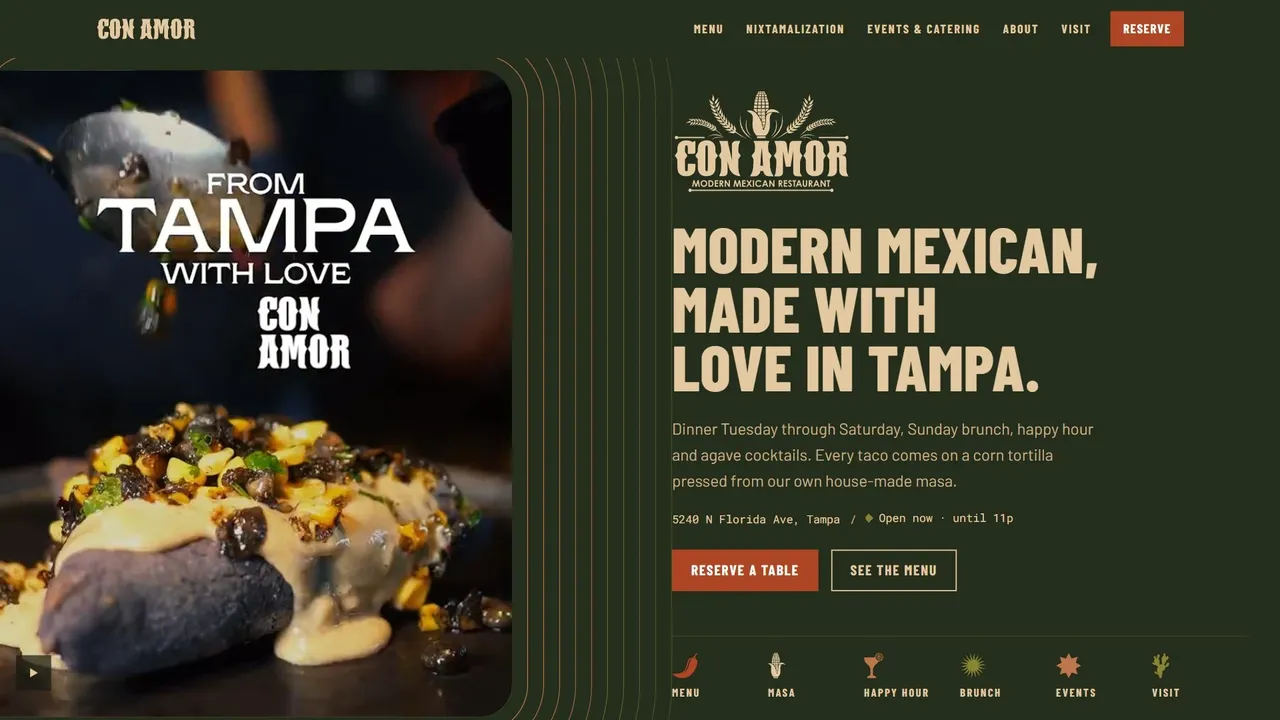
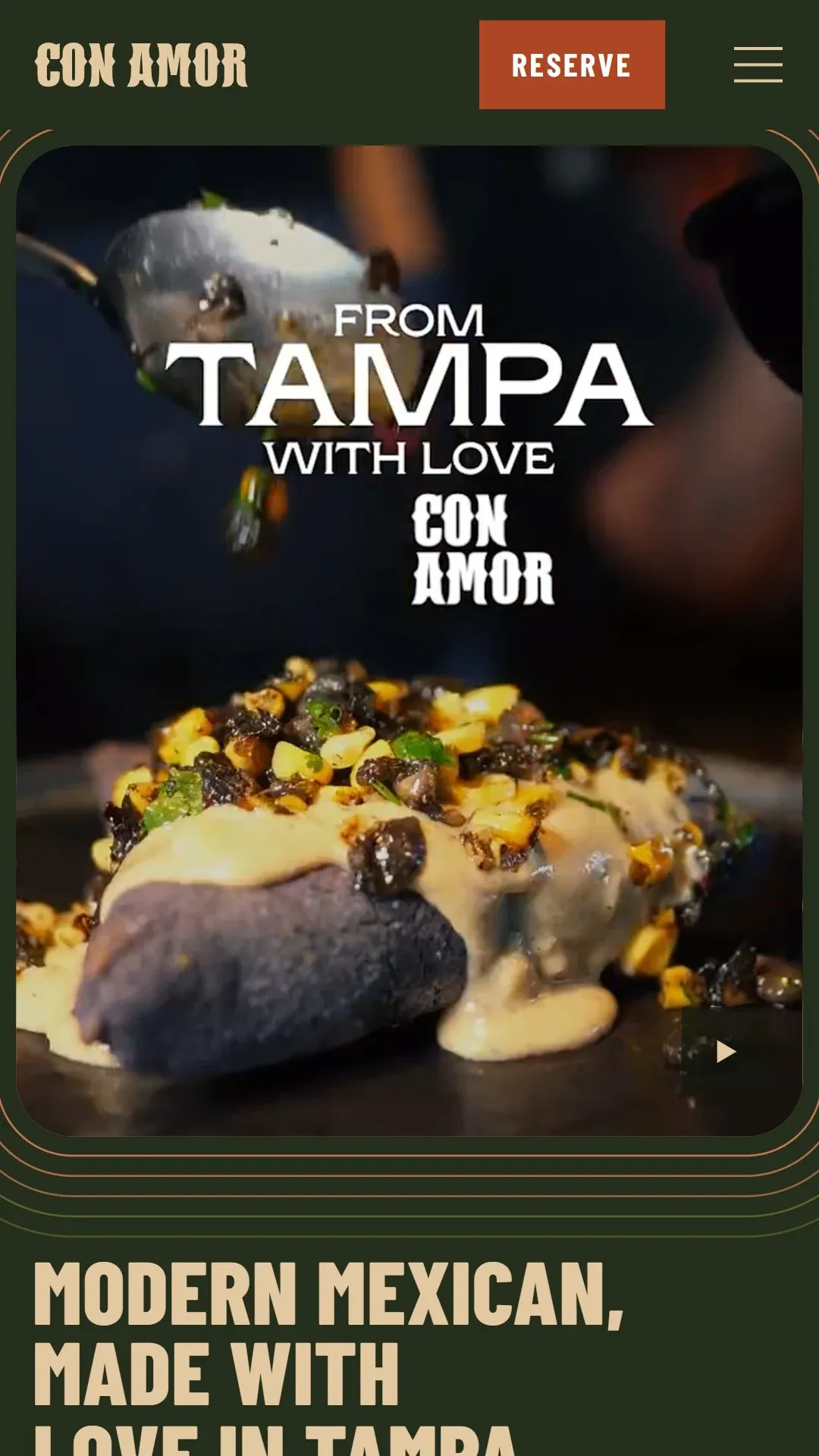
Live site — scroll and click inside both screens
The site, on film
Services
More work
From a WordPress page builder to a site with four seasons, a menu the team edits themselves, and a trompo on the loading screen.
Signature DevelopmentFrom a website-builder template to a bilingual villa showcase — with the 3D tour inside the page.
YoYo BurgersThe product was already there. The opportunity was making the brand look as strong as the food.
Further reading
Start with the jobs that happen the same way every time and cost you money when they’re slow: replying to new leads, following up, booking and reminders, asking for reviews, and weekly reporting. Instant lead replies come first — they’re the easiest win and the costliest to get wrong.
How Much Does a Small Business Website Cost in 2026?Most professionally built small business websites cost between $2,000 and $12,000, plus roughly $120–$2,400 a year to host and maintain. DIY templates cost far less up front; custom sites with booking, ordering, several languages or system integrations often start around $15,000.
Custom Website vs. Wix, Squarespace or WordPress: What Should a Growing Business Choose?There is no single right platform. Squarespace and Wix are genuinely good choices for a small site that rarely changes. WordPress suits content-heavy sites with a maintainer. A custom build earns its cost when the site is a working part of the business rather than a brochure, and when speed, structure or integrations start deciding revenue.
Want work like this?
Tell us what you're trying to stand out from.